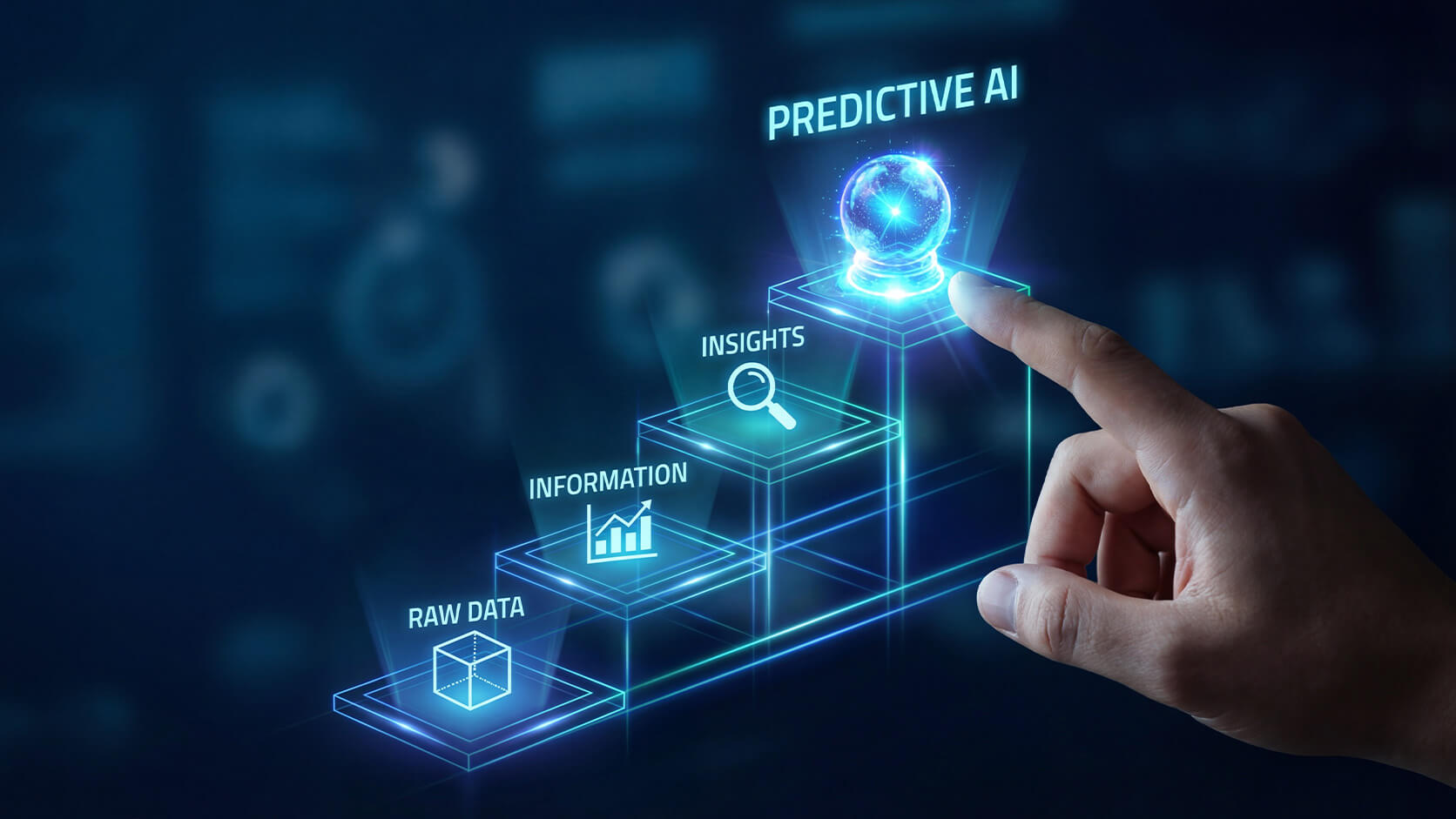
Predictive Analytics for Dealerships | AVAS Automotive Data Platform
Predictive Analytics for Dealerships: How AI Is Transforming Automotive Decision-Making
Introduction
The automotive industry has never generated more data than it does today.
Every vehicle purchase, service appointment, website visit, financing application, trade appraisal, connected vehicle event, customer interaction, and digital engagement creates valuable information that dealerships can use to improve business performance. Yet for many dealerships, this data remains scattered across multiple systems, making it difficult to identify meaningful trends or make proactive decisions.
Traditionally, dealerships have relied on historical reporting to measure success. Managers review monthly sales reports, service department performance, inventory aging, customer satisfaction scores, and financial statements to determine what happened in the past. While these reports remain valuable, they share one major limitation—they are reactive.
By the time a traditional report identifies a problem, the opportunity to prevent it has often already passed.
Imagine if your dealership could answer questions like these before they became problems:
Which customers are most likely to purchase another vehicle within the next six months?
Which service customers are beginning to disengage?
Which vehicles are approaching major maintenance milestones?
Which inventory units are likely to experience slower turn rates?
Which customers have enough positive equity to justify an upgrade conversation?
Which marketing campaigns will generate the highest return before launching them?
Which customers are at risk of leaving your dealership altogether?
These are the types of questions that Predictive Analytics is designed to answer.
Rather than simply reporting what has already happened, predictive analytics uses artificial intelligence (AI), machine learning, statistical modeling, and historical patterns to forecast future outcomes. For dealerships, this means making smarter decisions earlier, improving customer engagement, increasing operational efficiency, and uncovering revenue opportunities that might otherwise remain hidden.
According to McKinsey & Company, organizations that effectively use AI and advanced analytics consistently outperform competitors in customer engagement, operational performance, and long-term revenue growth because they make faster, data-driven decisions based on predictive insights rather than assumptions.
Learn more:
https://www.mckinsey.com/capabilities/growth-marketing-and-sales
In this guide, we'll explore how predictive analytics is transforming modern dealerships, the role artificial intelligence plays in automotive decision-making, practical dealership use cases, and how the AVAS Automotive Data Platform empowers dealerships to predict customer needs, optimize operations, and create more intelligent business strategies.
What Is Predictive Analytics?
Predictive analytics is the process of analyzing historical and real-time data to forecast future events.
Unlike traditional reporting, which answers the question:
"What happened?"
Predictive analytics answers questions such as:
What is most likely to happen next?
Which customers require attention today?
Which business opportunities should we prioritize?
Which risks can we prevent before they occur?
Predictive analytics combines multiple technologies, including:
Artificial Intelligence (AI)
Machine Learning
Statistical Modeling
Pattern Recognition
Customer Behavior Analysis
Connected Vehicle Intelligence
Business Intelligence Dashboards
Rather than relying on intuition or generalized assumptions, dealerships begin making decisions supported by data.
For example:
Traditional reporting might show that service appointments declined by 8% last quarter.
Predictive analytics identifies which customers are beginning to disengage before appointment volume declines.
Traditional reporting identifies aging inventory after units remain on the lot for 90 days.
Predictive analytics forecasts which vehicles are likely to slow before aging becomes a problem.
Traditional reporting measures campaign performance after marketing dollars have already been spent.
Predictive analytics helps dealerships prioritize audiences with the highest probability of conversion before campaigns begin.
The result is a dealership that proactively responds to changing conditions instead of reacting after opportunities have already been lost.
Predictive analytics is most effective when powered by a comprehensive Automotive Customer Data Platform (CDP) that brings customer, vehicle, and dealership data together into a single intelligent profile.
Why Automotive Predictive Analytics Matters More Than Ever
Automotive retail has become dramatically more complex over the past decade.
Dealerships now manage data from:
Dealer Management Systems (DMS)
Customer Relationship Management (CRM) platforms
Digital retailing platforms
Connected vehicles
Mobile applications
Service departments
Website analytics
Financing systems
Inventory management
Marketing automation
Customer communication platforms
Each system generates valuable information.
The challenge is connecting those data points into meaningful business intelligence.
Without predictive analytics, dealership teams often spend considerable time reviewing reports while still relying heavily on experience and instinct to make decisions.
Predictive analytics allows dealerships to identify patterns across millions of data points simultaneously.
For example, AI may discover that customers sharing these characteristics:
Vehicle ownership between 30–42 months
Positive trade equity
Increasing annual mileage
Recent website visits
Multiple service appointments
SUV inventory searches
have a significantly higher probability of purchasing another vehicle within the next several months.
Instead of sending generic promotions to the entire customer database, dealerships can focus attention on customers with the highest purchase intent.
Marketing becomes more relevant.
Sales teams become more efficient.
Customers receive communications that better match their needs.
Everyone benefits.
From Historical Reporting to Predictive Intelligence
Most dealership reporting focuses on past performance.
Examples include:
Last month's sales
Previous repair orders
Marketing performance
Gross profit reports
Inventory aging
Customer satisfaction scores
These reports remain important because they measure operational performance.
However, they do little to help dealerships prepare for future opportunities.
Predictive analytics changes the conversation.
Instead of asking:
"How many customers purchased last month?"
Dealerships begin asking:
"Which customers are most likely to purchase next month?"
Instead of reviewing service retention after customers leave:
AI identifies which customers are becoming inactive today.
Instead of reacting to declining inventory demand:
Machine learning forecasts changing buying trends based on customer behavior.
Instead of manually reviewing thousands of customer records:
Artificial intelligence automatically prioritizes the highest-value opportunities.
This shift from reactive reporting to proactive intelligence enables dealership leadership to make faster, more informed decisions.
According to IBM, predictive analytics helps organizations improve forecasting, optimize operational efficiency, reduce uncertainty, and make more informed strategic decisions by identifying patterns hidden within large datasets.
Learn more:
https://www.ibm.com/topics/predictive-analytics
Artificial Intelligence Powers Predictive Dealership Operations
Artificial intelligence is often misunderstood as a technology that replaces employees.
In reality, AI is most valuable when it helps employees make better decisions.
Within a dealership environment, AI continuously analyzes customer activity, ownership history, service records, connected vehicle information, website engagement, inventory trends, and operational performance to identify opportunities that deserve immediate attention.
Examples include:
Predicting Trade Opportunities
Rather than waiting until lease maturity, AI recognizes combinations of equity position, mileage, ownership duration, online activity, and service history that suggest a customer may be entering another buying cycle.
Sales teams receive earlier opportunities to begin personalized conversations.
Forecasting Service Demand
Vehicle age, seasonal driving habits, mileage accumulation, and maintenance history all influence future service needs.
Predictive analytics helps dealerships anticipate appointment demand, improve staffing, and optimize parts inventory.
Customer Churn Prediction
One of the most valuable capabilities of predictive analytics is identifying customers who may be drifting away from the dealership.
Examples include:
Declining service frequency
Reduced communication engagement
Longer periods between visits
Increased website activity without appointments
Missed maintenance recommendations
Rather than discovering customer loss after it occurs, dealerships gain opportunities to re-engage customers before relationships weaken.
Smarter Marketing Decisions
Predictive analytics improves campaign performance by helping dealerships focus on customers with the highest probability of responding.
Instead of broad campaigns targeting thousands of customers equally, marketing becomes data-driven and personalized.
This improves:
Email engagement
Appointment scheduling
Advertising efficiency
Customer satisfaction
Return on marketing investment
Artificial intelligence doesn't replace dealership relationships.
It strengthens them by ensuring employees spend their time engaging customers who need them most.
Predictive Analytics in Action: Real-World Dealership Use Cases
Predictive analytics delivers the greatest value when it moves beyond dashboards and becomes part of everyday dealership operations. Every department—from sales and marketing to fixed operations and executive leadership—can use predictive intelligence to improve decision-making, increase efficiency, and create better customer experiences.
Rather than simply collecting more data, dealerships begin transforming information into actions that directly impact revenue and customer satisfaction.
Let's explore how predictive analytics is changing the way successful dealerships operate.
Use Case 1: Predicting the Next Vehicle Purchase
Every dealership wants to know which customers are most likely to purchase another vehicle.
Traditionally, sales teams relied on broad assumptions such as:
Lease expiration
Vehicle age
Years since purchase
Previous sales history
While these indicators remain useful, they only tell part of the story.
Predictive analytics evaluates dozens—or even hundreds—of variables simultaneously, including:
Vehicle ownership duration
Annual mileage
Equity position
Previous purchase behavior
Service history
Connected vehicle activity
Website browsing behavior
Digital retail engagement
Financing milestones
Communication engagement
Artificial intelligence then assigns probability scores that identify customers most likely to purchase within a specific timeframe.
Rather than contacting thousands of customers with identical messaging, sales teams can focus their attention on the customers most likely to respond.
Benefits include:
Higher appointment conversion rates
Improved sales productivity
Better customer experiences
Increased closing percentages
More efficient marketing campaigns
Instead of chasing every lead equally, dealerships prioritize opportunities with the highest likelihood of success.
Use Case 2: Smarter Inventory Planning
Inventory management has always involved balancing supply with customer demand.
Ordering too many vehicles can increase carrying costs and aging inventory.
Ordering too few can result in missed sales opportunities.
Predictive analytics helps dealerships make more informed inventory decisions by analyzing:
Historical sales performance
Seasonal buying patterns
Local market trends
Vehicle search activity
Customer preferences
Trade-in activity
Current inventory velocity
Consumer demand signals
Instead of simply reviewing inventory aging reports, managers gain forward-looking insights into which vehicle segments are likely to experience stronger or weaker demand.
Examples include:
Growing demand for hybrid vehicles.
Seasonal increases in truck sales.
SUV demand based on regional trends.
Commercial fleet purchasing patterns.
Certified pre-owned inventory shortages.
According to Experian Automotive, vehicle registration data and ownership trends provide valuable insight into changing consumer preferences across the automotive marketplace.
Learn more:
https://www.experian.com/automotive
When inventory decisions become predictive rather than reactive, dealerships improve inventory turn while reducing unnecessary carrying costs.
Use Case 3: Predictive Service Scheduling
Service departments often rely on manufacturer maintenance schedules or estimated mileage intervals.
However, every customer drives differently.
Some customers drive fewer than 7,500 miles annually.
Others exceed 30,000 miles.
Predictive analytics uses connected vehicle information, historical service records, and ownership behavior to recommend maintenance based on actual vehicle usage.
Examples include:
Oil change forecasting
Tire replacement timing
Brake service recommendations
Battery replacement planning
Major maintenance milestones
Seasonal inspections
Rather than waiting for customers to schedule appointments themselves, dealerships can proactively communicate when maintenance is most appropriate.
Customers appreciate timely recommendations that reflect how they actually use their vehicles.
This improves:
Service retention
Customer satisfaction
Preventative maintenance
Repair order volume
Long-term customer loyalty
Use Case 4: Predicting Customer Churn Before It Happens
One of the most powerful capabilities of predictive analytics is identifying customers who may be preparing to leave the dealership.
Customer churn rarely happens overnight.
Instead, it often follows a gradual pattern.
Artificial intelligence may detect changes such as:
Fewer service visits.
Reduced email engagement.
Longer periods between appointments.
Missed maintenance intervals.
Declining mobile app usage.
Reduced website activity.
Lower communication response rates.
Rather than discovering lost customers months later, dealerships receive early warning indicators.
This allows personalized outreach before the relationship deteriorates.
Examples include:
Personalized maintenance offers.
Service appointment reminders.
Loyalty rewards.
Vehicle health check invitations.
Trade evaluation opportunities.
Customer appreciation communications.
Retention becomes proactive instead of reactive.
Use Case 5: Optimizing Marketing Campaign Performance
Traditional dealership marketing often segments audiences using basic filters such as:
ZIP code
Vehicle model
Purchase date
Age group
Predictive analytics enables significantly more sophisticated audience segmentation.
Marketing campaigns can target customers based on:
Purchase probability
Service likelihood
Vehicle usage
Ownership milestones
Customer lifetime value
Communication preferences
Previous campaign engagement
Connected vehicle insights
Instead of sending identical campaigns to the entire customer database, dealerships deliver highly personalized communications that reflect actual customer needs.
Benefits include:
Higher open rates
Increased click-through rates
More appointment bookings
Improved campaign ROI
Better customer engagement
According to McKinsey & Company, personalization powered by advanced analytics continues to be one of the strongest drivers of customer engagement and marketing effectiveness across industries.
Learn more:
https://www.mckinsey.com/capabilities/growth-marketing-and-sales
Connected Vehicle Intelligence Makes Predictions More Accurate
Artificial intelligence becomes significantly more valuable when paired with connected vehicle intelligence.
Historically, dealerships knew relatively little about how customers used their vehicles between service visits.
Connected vehicle technologies provide a more complete understanding of vehicle ownership by supplying valuable operational information, always with customer authorization and appropriate privacy controls.
Examples include:
Current mileage
Driving frequency
Vehicle inactivity
Maintenance milestones
Battery status
Diagnostic events
Seasonal driving behavior
Ownership duration
This additional information dramatically improves prediction accuracy.
Instead of estimating when maintenance should occur, dealerships base recommendations on actual vehicle usage.
Instead of assuming customers are ready for another purchase based solely on age, predictive models evaluate multiple ownership indicators simultaneously.
Connected vehicle intelligence transforms assumptions into measurable business intelligence.
Forecasting Customer Lifetime Value
One vehicle sale rarely represents the total value of a customer relationship.
Over several years, a single customer may generate revenue through:
Multiple vehicle purchases
Trade-ins
Routine maintenance
Major repairs
Accessories
Extended protection products
Financing
Insurance products
Referrals
Predictive analytics helps estimate Customer Lifetime Value (CLV) by evaluating historical customer behavior alongside current engagement patterns.
This allows dealerships to prioritize long-term relationship building rather than focusing exclusively on individual transactions.
For example:
A customer who consistently services their vehicles, purchases extended protection, and refers family members may represent significantly greater long-term value than a customer who only completes a single purchase.
Predictive analytics helps dealerships recognize these high-value relationships earlier.
Rather than applying identical marketing strategies to every customer, dealerships can personalize engagement based on projected lifetime value.
Executive Dashboards That Drive Better Decisions
Predictive analytics isn't just valuable for sales managers or marketing teams.
Executive leadership benefits from real-time visibility into dealership performance through intelligent business dashboards.
Instead of waiting until month-end reporting, leadership teams can monitor predictive indicators such as:
Future sales pipeline health.
Service appointment forecasts.
Inventory demand projections.
Customer retention trends.
Marketing performance predictions.
Revenue forecasting.
Customer satisfaction indicators.
Operational efficiency metrics.
This enables faster strategic decision-making.
Rather than reacting after business conditions change, executives gain earlier visibility into emerging opportunities and potential risks.
The dealership becomes more agile, more efficient, and better prepared to respond to changing market conditions.
The Future of Predictive Analytics in Automotive Retail
The automotive dealership of the future will not simply respond to customer needs—it will anticipate them.
As connected vehicles, artificial intelligence (AI), and cloud-based technologies continue to evolve, dealerships will have access to more operational intelligence than ever before. The challenge will no longer be collecting data. The challenge will be transforming that data into timely, actionable business decisions.
Predictive analytics is becoming the engine that powers this transformation.
Rather than asking:
"What happened last month?"
"Which campaign performed best?"
"Why did service appointments decline?"
Dealerships will increasingly ask:
Which customers are most likely to buy next?
Which vehicles will require service soon?
Which inventory should we acquire next month?
Which customers are becoming disengaged?
Which marketing strategy will produce the highest return?
Artificial intelligence will continuously analyze customer behavior, ownership history, connected vehicle intelligence, inventory movement, and market trends to recommend the next best action.
Instead of reviewing static reports, dealership teams will receive dynamic recommendations that help them make smarter decisions throughout the day.
The dealerships that embrace predictive intelligence today will be better positioned to compete tomorrow.
Why Data Quality Determines Prediction Accuracy
Predictive analytics is only as effective as the quality of the information powering it.
Artificial intelligence cannot accurately predict customer behavior if the underlying data is incomplete, outdated, or fragmented across disconnected systems.
Many dealerships currently manage customer information across numerous platforms, including:
Dealer Management Systems (DMS)
Customer Relationship Management (CRM) software
Service scheduling systems
Digital retail platforms
Marketing automation tools
Connected vehicle technologies
Inventory management systems
Finance and insurance applications
Each platform contains valuable information, but when these systems operate independently, predictive models lose visibility into the complete customer journey.
For example:
A customer may:
Service their vehicle regularly.
Browse inventory online.
Build payment estimates.
Have positive trade equity.
Open dealership marketing emails.
Drive significantly above average mileage.
Viewed separately, none of these activities may appear significant.
Viewed together, they strongly suggest the customer may be preparing to purchase another vehicle.
Predictive analytics depends on creating a unified customer profile that brings together every meaningful interaction into one intelligent view.
The cleaner the data, the more accurate the predictions become.
Building a Predictive Dealership Culture
Technology alone does not create competitive advantage.
Successful predictive dealerships combine advanced technology with operational processes that encourage proactive decision-making throughout the organization.
This means moving beyond traditional departmental silos.
Sales teams, service advisors, marketing departments, finance managers, and executive leadership should all benefit from shared predictive insights.
Examples include:
Sales Teams
Prioritize customers with the highest purchase probability instead of manually reviewing aging customer lists.
Service Advisors
Recommend maintenance based on actual vehicle usage, ownership milestones, and predictive service intervals.
Marketing Teams
Launch campaigns targeting customer segments most likely to engage rather than relying on broad demographic assumptions.
Inventory Managers
Adjust purchasing strategies using demand forecasts instead of reacting after inventory begins aging.
Executive Leadership
Monitor predictive business intelligence dashboards that provide forward-looking operational insights instead of relying solely on historical reporting.
When predictive analytics becomes embedded throughout dealership operations, every department benefits from faster, more informed decision-making.
Predictive intelligence also improves customer retention and lifecycle marketing by helping dealerships identify the right customer at the right time with the right message.
The Competitive Advantage of Predictive Decision-Making
Many dealerships have access to similar information.
The competitive difference lies in how effectively that information is used.
Historically, dealerships competed primarily through:
Inventory selection
Vehicle pricing
Advertising
Manufacturer incentives
Physical location
Today, another competitive advantage is emerging:
Decision speed.
Dealerships capable of identifying opportunities earlier gain meaningful advantages over competitors.
Examples include:
Contacting customers before competitors recognize purchase intent.
Scheduling maintenance before customers experience vehicle issues.
Optimizing inventory before market demand changes.
Re-engaging inactive customers before relationships are lost.
Improving marketing performance through AI-driven audience selection.
Predictive analytics allows dealerships to move faster because decisions are supported by continuously updated intelligence rather than periodic reporting.
Instead of reacting after opportunities appear, dealerships become proactive organizations capable of anticipating customer needs.
Why the AVAS Automotive Data Platform Powers Predictive Intelligence
Predictive analytics requires more than powerful algorithms.
It requires high-quality customer data, connected vehicle intelligence, artificial intelligence, and business analytics working together within one intelligent platform.
The AVAS Automotive Data Platform was designed specifically to help dealerships transform customer and vehicle data into predictive business intelligence.
Rather than functioning as another standalone application, AVAS connects information across the dealership ecosystem to create a unified, intelligent view of every customer relationship.
Key capabilities include:
Artificial Intelligence
AI continuously analyzes customer behavior, ownership history, connected vehicle information, and dealership interactions to identify opportunities before they become obvious through traditional reporting.
Predictive Customer Insights
Identify customers who may be approaching another purchase, require maintenance, present strong trade opportunities, or benefit from personalized engagement based on predictive behavioral modeling.
Connected Vehicle Intelligence
Transform connected vehicle data into actionable insights that improve maintenance forecasting, customer engagement, service retention, and ownership experiences.
Unified Customer Profiles
Bring together customer information from multiple dealership systems into one continuously updated customer record that supports more accurate predictive analytics.
Executive Business Intelligence
Provide dealership leadership with predictive dashboards that improve operational visibility, strategic planning, and long-term decision-making.
Automated Customer Engagement
Deliver relevant communications triggered by customer behavior, ownership milestones, and predictive insights rather than relying solely on scheduled marketing campaigns.
The result is a dealership that becomes increasingly intelligent over time.
Every customer interaction, service appointment, connected vehicle event, and ownership milestone contributes additional information that strengthens future predictions.
Learn more about the AVAS Automotive Data Platform:
https://myavas.com/automotive-data-platform
Conclusion
Predictive analytics is rapidly becoming one of the most valuable technologies available to automotive dealerships.
Rather than relying exclusively on historical reports and reactive decision-making, dealerships can now use artificial intelligence, connected vehicle intelligence, and advanced analytics to anticipate customer needs, optimize operations, and improve long-term business performance.
From forecasting vehicle purchases and improving inventory planning to increasing service retention and strengthening customer engagement, predictive analytics enables dealerships to make smarter decisions across every department.
The dealerships that embrace predictive intelligence today will be better positioned to build stronger customer relationships, improve operational efficiency, increase profitability, and deliver exceptional ownership experiences for years to come.
The AVAS Automotive Data Platform brings together customer intelligence, connected vehicle data, artificial intelligence, and predictive analytics into one powerful ecosystem designed specifically for modern dealerships.
Whether your goal is increasing repeat vehicle sales, improving fixed operations, enhancing marketing performance, or creating a connected ownership experience, AVAS provides the intelligent foundation needed to turn dealership data into measurable business growth.
The future of automotive retail belongs to dealerships that can predict customer needs before opportunities are missed—and with the AVAS Automotive Data Platform, that future starts today.
Learn more about how AVAS can help your dealership unlock the power of predictive analytics and AI-driven decision-making:
https://myavas.com/automotive-data-platform
👉 Book a demo to see how AVAS Automotive Data Platform can impact your Dealerships retention.
👉 Call Us and speak with a specialist